Introduction
In today’s highly competitive business environment, organizations constantly work on projects to develop products, launch services, improve operations, implement technologies, and achieve strategic goals. However, successfully completing projects requires proper planning, coordination, resource management, and leadership. This responsibility falls on a professional known as a Project Manager.
A Project Manager is one of the most important professionals within an organization. They ensure that projects are completed on time, within budget, and according to quality standards. Whether it’s constructing a building, developing software, launching a marketing campaign, implementing an IT system, or organizing a large event, project managers play a critical role in ensuring success.
The demand for skilled project managers continues to grow across industries because organizations increasingly rely on projects to drive innovation, digital transformation, and business growth. Project management is considered one of the most versatile and rewarding professions, offering excellent career advancement opportunities and competitive salaries.
This comprehensive guide covers everything you need to know about becoming a Project Manager, including job responsibilities, educational requirements, skills, certifications, salary expectations, career growth, challenges, and future opportunities.
What is Project Management?
Project Management is the process of planning, organizing, executing, monitoring, and closing projects to achieve specific objectives within defined constraints such as time, cost, and scope.
Every project has a beginning and an end, along with specific goals that need to be achieved. Project management ensures that all project activities are coordinated efficiently and effectively to deliver desired outcomes.
Project management involves:
- Defining project goals and objectives
- Planning project activities
- Managing resources and budgets
- Leading project teams
- Monitoring progress
- Managing risks and challenges
- Communicating with stakeholders
- Ensuring successful project delivery
Who is a Project Manager?
A Project Manager is a professional responsible for overseeing the entire lifecycle of a project. They coordinate people, resources, timelines, budgets, and processes to ensure that project objectives are achieved successfully.
Project Managers serve as leaders, planners, problem-solvers, communicators, and decision-makers throughout the project journey. They act as the central point of communication between stakeholders, team members, executives, vendors, and clients.
Simply Put: A Project Manager ensures that a project is completed successfully by managing people, processes, budgets, schedules, and risks from start to finish.
Why Choose Project Management as a Career?
1. High Demand Worldwide
Organizations across all industries require project managers to oversee projects and ensure successful outcomes.
2. Attractive Salary Packages
Project managers are highly valued because of their leadership responsibilities and impact on business success.
3. Leadership Opportunities
Project management provides opportunities to lead teams, influence strategic decisions, and develop management skills.
4. Industry Flexibility
Project management skills are transferable across industries such as technology, construction, healthcare, finance, manufacturing, and telecommunications.
5. Career Growth Potential
Project managers can progress into senior management, executive leadership, and consulting roles.
6. Dynamic Work Environment
Each project presents unique challenges, making the profession engaging and intellectually stimulating.
Roles and Responsibilities of a Project Manager
Project Managers perform numerous tasks throughout a project’s lifecycle.
- Defining project scope and objectives
- Developing project plans
- Creating schedules and timelines
- Allocating resources
- Managing budgets
- Leading project teams
- Monitoring project progress
- Managing project risks
- Resolving conflicts and issues
- Communicating with stakeholders
- Tracking project performance
- Ensuring quality standards
- Managing project documentation
- Delivering final project outcomes
Project Life Cycle
Project managers oversee projects through several phases known as the Project Life Cycle.
1. Project Initiation
The project idea is evaluated, objectives are defined, and stakeholders are identified.
2. Project Planning
Detailed project plans are created, including schedules, budgets, resources, and risk management strategies.
3. Project Execution
The project team begins carrying out tasks according to the project plan.
4. Project Monitoring and Control
Progress is tracked, performance is measured, and adjustments are made when necessary.
5. Project Closure
The project is completed, evaluated, documented, and officially closed.
Types of Project Managers
IT Project Manager
Manages software development, technology implementation, and digital transformation projects.
Construction Project Manager
Oversees building projects, infrastructure development, and construction operations.
Engineering Project Manager
Coordinates engineering projects involving technical teams and specialized resources.
Marketing Project Manager
Manages advertising campaigns, branding initiatives, and promotional projects.
Healthcare Project Manager
Leads healthcare initiatives such as hospital system upgrades and medical process improvements.
Business Project Manager
Handles organizational change, business transformation, and operational improvement projects.
Educational Requirements
Although project managers come from diverse backgrounds, formal education often provides a strong foundation.
Relevant Degree Programs
- Bachelor of Business Administration (BBA)
- Bachelor of Management Sciences
- Bachelor of Engineering
- Bachelor of Information Technology
- Bachelor of Computer Science
- Bachelor of Commerce
Advanced Degrees
- Master of Business Administration (MBA)
- Master of Project Management
- Executive MBA Programs
- Master of Engineering Management
Essential Technical Skills
Project Planning
Project managers must create detailed plans that define activities, timelines, and deliverables.
Budget Management
Managing project costs is essential to ensure financial success.
Risk Management
Identifying and mitigating risks helps prevent project failures.
Scheduling
Effective scheduling ensures tasks are completed on time.
Resource Management
Resources such as personnel, equipment, and budgets must be allocated efficiently.
Quality Management
Project managers ensure deliverables meet required quality standards.
Important Soft Skills
- Leadership
- Communication Skills
- Negotiation Skills
- Problem Solving
- Decision Making
- Time Management
- Conflict Resolution
- Adaptability
- Team Building
- Strategic Thinking
Popular Project Management Tools
| Tool | Purpose |
|---|---|
| Microsoft Project | Project Planning and Scheduling |
| Asana | Task Management |
| Trello | Workflow Management |
| Jira | Agile Project Management |
| Monday.com | Project Collaboration |
| ClickUp | Task and Project Tracking |
| Smartsheet | Project Planning |
| Basecamp | Team Communication |
| Wrike | Project Coordination |
| Notion | Documentation and Planning |
Industries Hiring Project Managers
- Information Technology
- Construction
- Healthcare
- Telecommunications
- Banking and Finance
- Manufacturing
- Government Organizations
- Education Sector
- Energy and Utilities
- Consulting Firms
- Transportation and Logistics
- Media and Entertainment
Salary Structure for Project Managers
| Experience Level | Average Monthly Salary (PKR) |
|---|---|
| Project Coordinator | 50,000 – 120,000 |
| Assistant Project Manager | 120,000 – 250,000 |
| Project Manager | 250,000 – 600,000+ |
| Senior Project Manager | 500,000 – 1,000,000+ |
| Program Manager | 800,000 – 1,500,000+ |
| Portfolio Manager | 1,000,000 – 2,000,000+ |
| Director of Project Management | 1,500,000 – 3,000,000+ |
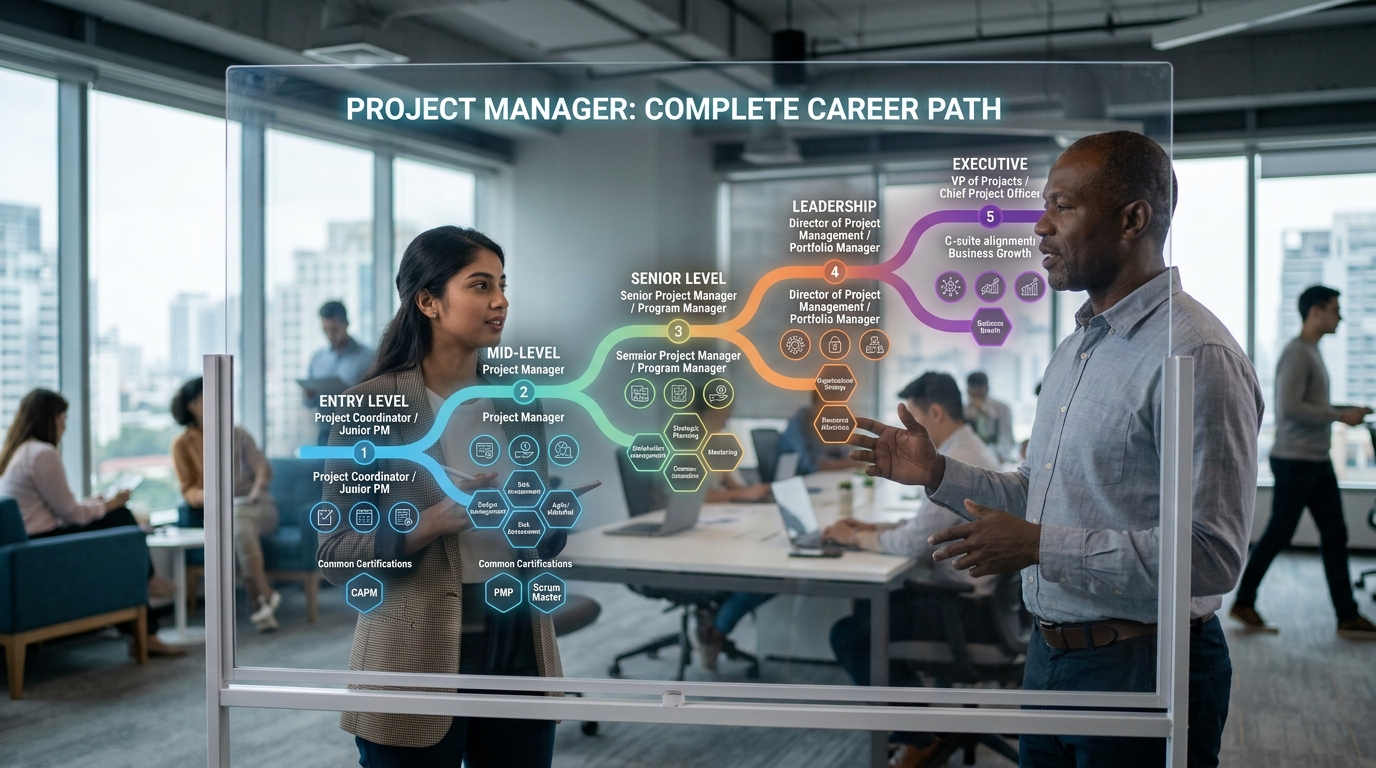
Career Growth Path
- Project Assistant
- Project Coordinator
- Junior Project Manager
- Project Manager
- Senior Project Manager
- Program Manager
- Portfolio Manager
- PMO Manager
- Director of Project Management
- Chief Operating Officer (COO)
Professional Certifications
- Project Management Professional (PMP)
- Certified Associate in Project Management (CAPM)
- PRINCE2 Certification
- PMI Agile Certified Practitioner (PMI-ACP)
- Certified Scrum Master (CSM)
- SAFe Agilist Certification
- Google Project Management Professional Certificate
- CompTIA Project+ Certification
Challenges Faced by Project Managers
- Managing tight deadlines
- Handling budget constraints
- Resolving team conflicts
- Managing changing project requirements
- Balancing stakeholder expectations
- Addressing project risks
- Ensuring quality while meeting deadlines
- Managing multiple projects simultaneously
Future of Project Management
The future of project management is extremely promising. Organizations are increasingly adopting project-based work structures to achieve strategic objectives and manage innovation. As businesses continue investing in digital transformation, infrastructure development, and global expansion, the demand for skilled project managers is expected to rise significantly.
Emerging technologies such as Artificial Intelligence (AI), Automation, Cloud Computing, Big Data Analytics, and Agile methodologies are reshaping project management practices. Modern project managers must combine traditional leadership skills with digital expertise to remain competitive.
According to industry forecasts, project-oriented employment will continue expanding globally, creating millions of new opportunities for qualified project management professionals.
Tips for Becoming a Successful Project Manager
- Develop strong leadership abilities
- Improve communication skills
- Learn project management methodologies
- Master project management software
- Build problem-solving capabilities
- Gain practical project experience
- Earn professional certifications
- Learn risk management techniques
- Develop stakeholder management skills
- Stay updated with industry trends
Conclusion
Project Management is one of the most valuable and respected professions in the modern business world. Project managers help organizations transform ideas into successful outcomes by planning, coordinating, and delivering projects efficiently.
With excellent salary potential, strong demand across industries, leadership opportunities, and continuous career growth, Project Management offers an exciting and rewarding professional journey. Individuals who develop strong organizational, communication, and leadership skills can build highly successful careers as Project Managers while contributing significantly to organizational success.